
Originally Posted On: https://www.ucanpack.com/blog/post/corrugated-sheets-vs-foam-inserts-which-offers-better-protection
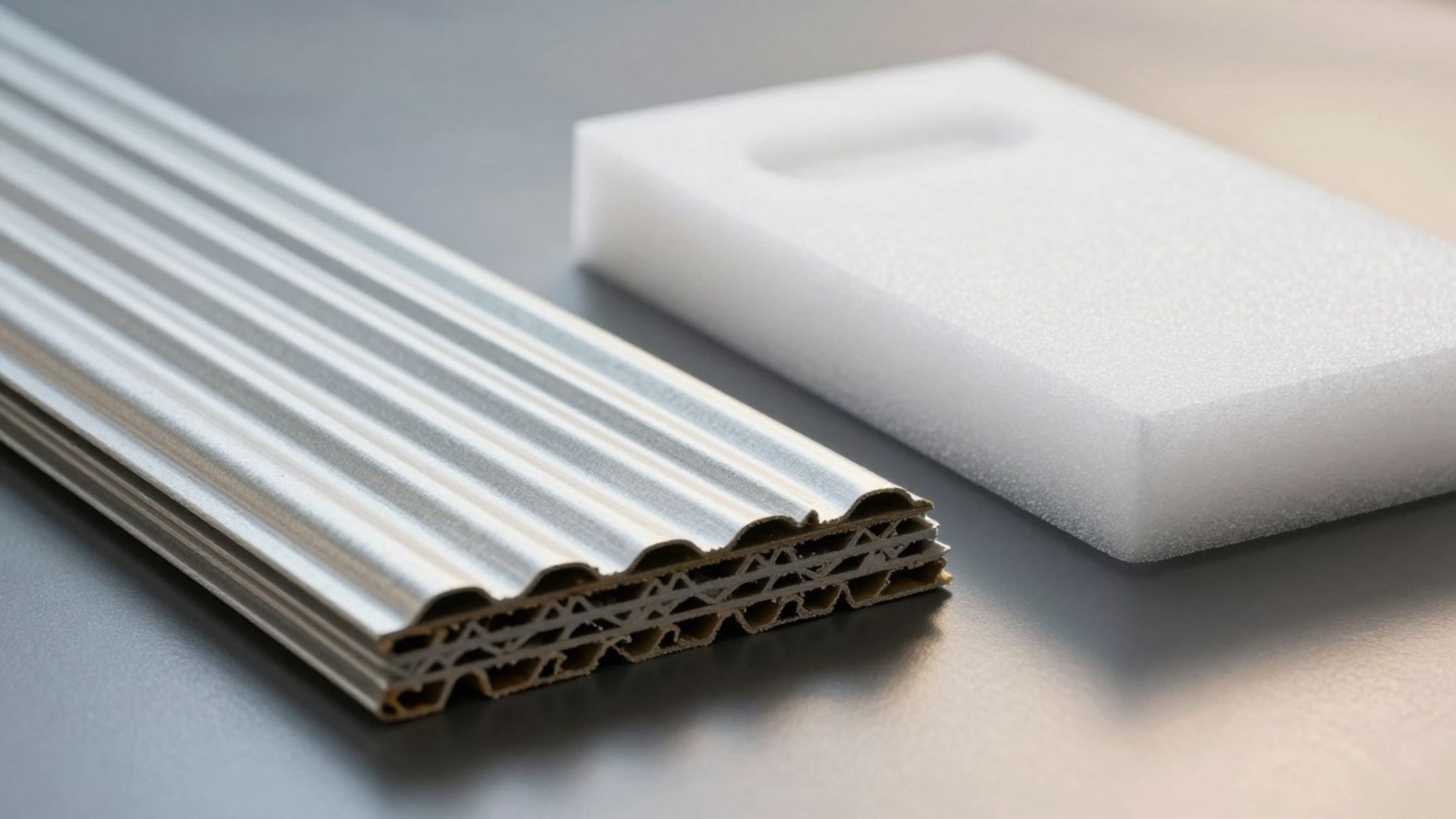
You’re staring at a pallet of finished goods, and there’s this nagging question in your head — will it survive the trip? I get it. I’ve spent the better part of my career testing, breaking, and rebuilding packaging systems, and I can tell you the choice of interior protection isn’t something you wing. Get it wrong and you’re looking at crushed product, angry customers, and returns eating into your margins.
The showdown between two materials — corrugated sheets and foam inserts — is one I’ve walked clients through hundreds of times. It goes way beyond just “packing stuff.” This decision touches your cost structure, your damage claim rate, your customer satisfaction scores, and honestly… your reputation.
So here’s what I’ve put together for you. Think of this as a no-nonsense, spec-driven guide that cuts through the marketing fluff. I’ve tried to be fair to both sides because — and I mean this — both materials have legitimate applications.
It’s a bit like selecting the right alloy for a structural beam. You wouldn’t just grab whatever’s cheapest. You’d match the material properties to the load profile. Same principle here — match the protection to the threat.
We’ll walk through the mechanical differences: compression resistance versus energy absorption. We’ll look at what it actually costs over time, not just per unit. And yeah, we’ll talk about the environmental angle because that matters more than a lot of folks realize.
At UCanPack, our team works with manufacturers and shippers every single day on exactly this stuff. We’re not just moving boxes — we’re engineering the space inside those boxes.
Key Takeaways
- Selecting the correct interior packaging is critical for preventing product damage during transit and storage.
- The decision between corrugated and foam solutions directly affects your operating costs and customer experience.
- This guide provides an unbiased, specification-based comparison to simplify your material selection.
- Key factors to weigh include structural compression strength versus impact energy absorption.
- Cost analysis and environmental impact are important considerations that compound over time.
- UCanPack offers expert guidance and hands-on consultation to help you navigate this selection process.
- Your goal is to make a data-informed decision that protects both your products and your brand.
The Critical Role of Interior Packaging
Effective packaging isn’t about making things look pretty — it’s your product’s bodyguard against the absolute chaos of the supply chain. I’ve seen what happens inside a trailer doing 70 on I-85. It’s not gentle.
Think about the journey for a second. Your item leaves your facility, gets tossed through sorting hubs, stacked three pallets high in a truck, and rattled by road vibration for hundreds of miles. Maybe it gets dropped off a dock. Maybe it sits in a humid warehouse for a week. All of this happens completely outside your control.
That turbulent trip is invisible to you. But the result? That shows up on your customer’s doorstep. And they don’t care about your logistics challenges — they care about what’s inside the box.
Interior packaging is the silent layer that stands between your product and every one of those hazards. It absorbs mechanical shock. It provides compression resistance. It immobilizes components so nothing shifts during shipping. Using the right cardboard sheets for shipping as interior support can be the difference between a five-star review and a damage claim.
When the interior protection is dialed in correctly, it’s invisible to the end user. They just open the box, and everything’s perfect. That’s the goal.
The business impact is real and measurable. Quality interior materials reduce product loss and minimize return rates. That protects your bottom line immediately — and I’m not talking about small numbers. I’ve seen operations cut damage claims by 40% just by switching their interior packaging strategy.
More importantly, it builds trust. A flawless unboxing experience boosts satisfaction and drives repeat purchases. It turns a transaction into something the customer actually remembers. That’s brand equity you can’t buy with advertising.
So let me ask you this: What if your packaging could do more than fill dead air space? What if it actively contributed to your profitability?
That question brings us to two primary contenders in the protective packaging space. First, the rigid and versatile corrugated sheet — an engineered board with serious compression specs. Second, the soft, conforming foam insert — a material designed to dissipate kinetic energy on impact.
“The right interior packaging doesn’t just prevent damage — it communicates care and quality before the customer even sees the product.”
— Packaging Logistics Expert
There’s no universal “best” answer here. The ideal material depends entirely on what you’re protecting, how it travels, and what threats it faces. Your budget and your environmental commitments factor in, too — those aren’t afterthoughts.
To give you a quick visual on the core differences, here’s a side-by-side snapshot:
Consideration
Corrugated Sheets
Foam Inserts
Primary Protection Style
Structural rigidity and compression strength
Impact absorption and vibration damping
Ideal For
Heavier items, multi-component kits, items needing dividers
Delicate electronics, precision components, high-value fragile goods
Cost Perception
Generally lower material cost, highly customizable
Higher material cost, excellent for premium presentation
Choosing between them isn’t about chasing the “strongest” option on paper. It’s about matching the protection profile to your product’s specific vulnerability. I’ve seen people over-engineer their packaging and waste money. I’ve also seen people under-engineer it and lose far more in damage claims.
You want to dodge both mistakes. Over-protecting with expensive materials you don’t need is a budget leak. Under-protecting and inviting damage claims is worse — it hurts your reputation and your wallet.
In the sections ahead, we’ll break both materials down to their core specs. Composition, performance data, ideal use cases. The goal is to hand you enough clarity to make a confident, informed call for your operation.
Every product deserves the right shield. Your choice of interior packaging is the first real step in delivering on the promise you make to your customer.
What Are Corrugated Sheets? A Versatile Packaging Workhorse
Let me introduce you to one of the most dependable materials in the packaging engineer’s toolbox: the corrugated sheet. This isn’t just “cardboard” — I cringe a little when people call it that. It’s an engineered paperboard composite, designed from the ground up for load-bearing protection.
Think of it as your product’s first structural defense layer inside the box. The architecture of this material — that fluted inner layer — is the reason it works so well. It’s clever engineering, honestly.
Material Composition and Flute Profiles
At its core, corrugated cardboard sheets are built with an arched, fluted medium sandwiched between flat linerboard faces. This sandwich construction is what gives the material its remarkable strength-to-weight ratio. A lightweight board that punches well above its weight class.
The specific flute profile is where things get interesting from a specification standpoint. Common profiles like B, C, and E flute each offer a different performance balance.
B flute delivers solid stacking strength and a thinner profile — good for tighter fits. C flute is your all-arounder, providing excellent cushioning and compression resistance. The E flute is the thinnest of the three, giving you a smooth printing surface with decent structural performance. Each serves a specific purpose.
When you look at single wall corrugated sheets, you’re getting one fluted medium between two liners. That handles most standard applications just fine. But for heavier-duty jobs — palletized loads, stacked inventory, industrial parts — double wall corrugated sheets give you two fluted layers and three liners. The compression resistance jumps significantly.
It’s worth pointing out that we’re talking about paper-based corrugated board here, not corrugated metal roofing panels. Different universe. Our focus is on a sustainable, recyclable material that’s ideal for partitioning, void fill, product separation, and structural reinforcement inside shipping containers.
The fluted structure functions like a series of miniature I-beams. The load gets distributed across the full panel area rather than concentrating at a single point. That inherent rigidity is what prevents crushing during transit — and it does it without adding much weight.
One of the biggest advantages I see with this material is its customizability. You can score it, fold it, die-cut it, slit it — whatever configuration you need. That flexibility lets you build box divider cardboard sheets, or custom sleeves that snugly secure multiple items inside a single box. I’ve designed corrugated partition systems for everything from wine bottles to automotive parts.
For applications where you need extra stiffness, double-wall construction follows the same engineering principle you see in structural building materials. More layers, more load capacity, minimal bulk increase. Simple and effective.
There’s an aesthetic dimension too, which matters more than some engineers want to admit. With premium digital print liners, you can transform a plain protective panel into a branded experience. Full-color graphics, logos, handling instructions — all printed directly on the interior surface of the corrugated board. White corrugated sheets are particularly popular for this since they give you a clean, bright canvas for high-quality printing.
Bottom line — this material serves as the versatile, reliable backbone of countless packaging systems. Whether you need simple layer separators or complex multi-tiered assemblies for your warehouse, corrugated board delivers.
Understanding Foam Inserts: Cushioning and Contour Protection
Foam inserts represent a fundamentally different protection philosophy. Where corrugated board says “I will resist the force,” foam says “I will absorb the force.” It’s about contouring and energy dissipation rather than rigid defense.
Think of foam as a precision-cushioning specialist. It’s engineered to cradle fragile items and isolate them from the kinetic energy that bounces around inside a truck or cargo container.
When a sudden drop occurs — and trust me, drops happen — foam compresses first. It absorbs that shock energy before it ever reaches your delicate product. That millisecond of compression is the difference between an intact delivery and a shattered screen.
This isn’t just bulk padding stuffed around a product. Properly specified foam is engineered to conform to every contour of your item, immobilizing it completely.
Types of Protective Foam: EPS, PE, and Custom Shapes
Not all foam performs the same, and choosing the wrong type is a mistake I see too often. The material you select has to match the specific threat profile your shipment faces.
Let me walk you through the main options.
- Expanded Polystyrene (EPS): This is the rigid, white foam most people know as “styrofoam.” It provides firm, structural support and excels at blocking and bracing heavier components within a box. EPS is particularly effective when you need the foam to bear some static load — think appliances or heavy electronics.
- Polyethylene (PE) Foam: This is the softer, more pliable option. It has a dense, sponge-like feel and is outstanding for cushioning sensitive surfaces against scratches, scuffs, and light impacts. PE foam recovers its shape after compression, which matters if you’re dealing with reusable or returnable packaging.
- Custom-Molded Shapes: This is the top tier. Through die-cutting or thermoforming, foam gets shaped into a cavity that mirrors your product’s exact geometry. Zero movement. Total immobilization. It eliminates every threat except maybe a forklift running over the box — and even then, you’d be surprised.
Your decision between these types balances protection requirements against cost and presentation goals.
Property
EPS Foam
PE Foam
Custom Molded Foam
Material Structure
Closed-cell, rigid beads
Cross-linked, flexible foam
EPS or PE, precision-shaped
Primary Feel
Hard and firm
Soft and pliable
Contoured fit
Best For
Blocking, bracing, structural support
Surface protection, light cushioning
High-value, fragile, or odd-shaped items
Typical Cost
Low to medium
Medium
Higher upfront (ideal for volume)
Primary Advantage: Superior Shock and Vibration Absorption
The core strength of foam — and I mean this from a materials science standpoint — lies in its cellular structure. Millions of tiny air pockets compress under load, and that compression dissipates kinetic energy. The force of an impact gets spread out and absorbed rather than transmitted directly through to your goods.
It’s especially effective against the kind of constant, low-frequency vibration you get during truck transport. Those subtle oscillations don’t seem like much, but over hundreds of miles, they can loosen fasteners, fatigue solder joints, and shift components out of alignment. Foam acts as a damping barrier, creating a stable, isolated microenvironment for sensitive electronics or precision instruments.
There’s a tactile element too. When a customer opens a box and feels high-quality foam cradling the product, it communicates something. It says, “We cared enough to protect this properly.” That sensory experience elevates the unboxing moment — and in an era where people film unboxings for social media, that impression matters.
Considerations: Cost and Environmental Impact
Let me be straight about two factors that trip people up: price and sustainability.
Custom foam tooling carries a higher initial investment. Molds, dies, setup — it adds up. That cost makes foam most practical for high-volume, high-value product lines where the per-unit cost drops to something reasonable. If you’re shipping ten thousand units of the same SKU, the math works beautifully.
For lower volumes, standard sheet or plank foam in common thicknesses is more budget-friendly. You can still achieve excellent protection by cutting to size manually or with basic tooling. Not as elegant as custom cavities, but effective.
On the environmental front, this is where foam has historically faced scrutiny. Traditional polystyrene doesn’t recycle easily in most municipal systems. But the industry has responded. Many suppliers now offer biodegradable or plant-based foam alternatives that break down in composting facilities. If sustainability is part of your brand positioning, ask your provider about these newer options. It’s evolving fast.
Ultimately, foam is the right choice when the primary threat is dynamic — drops, jolts, vibration. Not static compression. Choose foam for sensitive electronics, glass components, lab instruments, or anything where a single impact event could trigger a return. It’s the dedicated guardian for your most delicate shipments.
Head-to-Head Comparison: Corrugated Sheets vs. Foam Inserts
Alright, let’s put these two materials side by side and get specific about where each one genuinely excels. This isn’t about crowning a champion — materials science doesn’t work that way. It’s about matching core strengths to the actual threats your product faces on its journey.
Your shipment has two main enemies. The first is static compression — crushing weight from stacking during storage and transit. The second is dynamic impact — sudden drops, jolts, and the relentless vibration of road or air transport.
Each material is engineered to neutralize one of these threats more effectively than the other. Understanding which threat dominates your situation is 90% of the decision.
Protection Type: Structural Rigidity vs. Impact Absorption
Their protection philosophies are fundamentally different, and I want to be precise about this. One behaves as a rigid skeleton. The other functions as a shock-absorbing muscle.
Using cardboard sheets for packaging gives you structural defense. The fluted architecture creates significant compression strength — the material resists crushing forces from top, bottom, and sides simultaneously. That rigid panel distributes load across its entire surface area, preventing localized failure.
Foam inserts specialize in energy dissipation. Their cellular structure compresses on impact, absorbing and spreading the shock force. This cushion’s delicate items from drops and vibrations by converting kinetic energy into heat — a tiny amount, but it’s the mechanism that saves your product.
It’s like the difference between a steel beam and an airbag. One holds structure. The other absorbs a collision. Both protect, but against different threats.
Weight and Shipping Cost Implications
Weight affects your freight bill directly. For e-commerce operations shipping hundreds or thousands of packages monthly, grams matter.
Corrugated configurations offer a superior strength-to-weight ratio. Cardboard sheets are often substantially lighter than equivalent foam solutions, especially when you’re comparing against dense PE or custom-molded EPS.
Saving even 50 grams per package multiplies across your monthly volume. Over a year of shipments, that weight reduction translates to meaningful freight savings — money that drops straight to your bottom line.
Foam, while excellent at protection, can add more mass to each shipment. This is particularly true for high-density, high-performance foam grades. Always factor the weight penalty into your total landed cost calculation before committing.
Cost-Effectiveness and Value Over Time
Analyze cost beyond the sticker price. I always tell clients: look at value across hundreds or thousands of shipment cycles, not just the first purchase order.
Corrugated sheets typically carry a lower per-unit cost, and there are usually no expensive custom tooling charges involved. That makes them tremendously flexible for operations with diverse or frequently changing product lines. You can order custom cardboard sheets cut to your dimensions and get delivery fast. That supports lean, just-in-time fulfillment workflows.
Foam’s value proposition strengthens in high-volume, stable-SKU environments. The per-unit cost drops substantially with large, repeated production runs. If you’re shipping the same product month after month, foam’s initial tooling investment amortizes quickly and becomes extremely cost-efficient.
Sustainability and Disposal
This matters more than it did five years ago. Your customers care. Their customers care. The disposal story of your packaging is part of your brand narrative now.
Corrugated cardboard is one of the most widely recycled materials on the planet. It’s biodegradable, made from renewable wood fiber, and accepted in virtually every curbside recycling program. Disposal is straightforward for both you and your end customer. Using kraft corrugated sheets reinforces an eco-conscious brand image because the natural brown material signals sustainability without you having to say a word.
Foam recycling is more variable. It depends on local infrastructure and the specific polymer used. Traditional EPS has faced legitimate challenges. However, the supply base is evolving — newer plant-based and recyclable foam formulations are entering the market. Always ask your supplier about their sustainable material options before committing to a foam specification.
Ease of Assembly and Use
Don’t overlook the human factor on your pack line. Assembly speed and simplicity reduce labor costs per unit, and that compounds across your operation.
Corrugated sheets can be folded, scored, and assembled by hand in seconds. They rarely require tape or additional fasteners. You can also cut them to any dimension on-demand with basic tools — a box cutter and a straightedge is all you need. That flexibility is invaluable for handling last-minute order changes or custom requests. Cardboard sheets for packing are intuitive even for new warehouse staff with minimal training.
Foam inserts are typically pre-formed, drop-in solutions. They’re fast to use — you literally place the product in the cavity and close the box. But they require proper storage to avoid crushing or deformation, and they’re purpose-built for a specific SKU. Less flexibility, but maximum speed and consistency for repetitive packing operations.
Comparison Factor
Corrugated Sheets
Foam Inserts
Core Protection
Structural rigidity & compression strength
Impact absorption & vibration damping
Weight Profile
Often lighter, reduces shipping costs
Can be denser, adding to freight weight
Cost Over Time
Lower unit cost, great for variable product lines
Higher volume efficiency, ideal for consistent SKUs
Sustainability
Widely recycled, biodegradable, and renewable
Recycling varies; ask about newer eco-options
Ease of Use
Hand-folded, cut-to-size flexibility
Drop-in simplicity requires careful storage
Best Metaphor
A resilient building frame
A custom-fitted, shock-absorbing case
So, which is better? That’s the wrong question. The right question is: what’s the dominant threat to your product? Crushing weight or sudden impact? Your answer to that question guides you straight to the ideal material.
Neither material is inherently superior. The right choice aligns with your product’s vulnerabilities, your operational workflow, and your brand values.
Choosing the Right Solution for Your Product
The real test of packaging wisdom is applying all of this to the actual items sitting on your production line. We’ve compared the specifications. Now let’s match the right protector to your specific goods.
Think about your product’s personality — and I know that sounds odd coming from an engineer, but hear me out. Is it heavy and robust but susceptible to surface damage? Is it lightweight yet incredibly brittle? Your answer points directly to the best defense strategy.
The right choice does more than prevent damage during transit. It enhances your brand from the moment someone slices the tape on that box. It transforms a routine delivery into a moment your customer remembers. That matters, especially if you’re selling direct-to-consumer.
Your product has to survive the rough reality of the shipping world. Let’s find it the right shield.
When to Choose Corrugated Sheets: Heavy, Fragile, or Multi-Item Shipments
This material is your go-to when the primary requirement is structural strength and organization. The fluted design creates a rigid fortress inside your shipping box.
Choose corrugated sheet layer pads when you’re stacking products on pallets and need to distribute weight evenly between tiers. They prevent the lower layers from bearing point loads that cause crushing and deformation. I’ve seen layer pads save entire pallets of product that would have been write-offs otherwise.
Corrugated is also the right call for fragile items that need support rather than cushioning — framed artwork, ceramic tiles, flat-panel components. The board provides a rigid backing plane that prevents flexing and cracking.
One of its best applications is organizing multi-component shipments. Corrugated sheet box inserts let you build custom divider grids that keep every piece separated and secure during transit. Parts kits, hardware assortments, multi-bottle shipments — corrugated dividers handle all of it cleanly.
When to Choose Foam Inserts: Delicate Electronics and High-Value Components
Foam is the dedicated guardian for your most sensitive, highest-value products. It specializes in neutralizing vibration and absorbing the energy from sudden shocks.
This is the non-negotiable choice for delicate electronics — circuit boards, glass displays, optical instruments, precision measuring equipment. The foam cradles every contour, absorbing impact energy before it can reach fragile solder joints or brittle components.
If the number one threat to your item is dynamic — constant road vibration, handling drops at distribution hubs — foam is your answer. It creates a stable, isolated pocket of protection where the product essentially floats inside the container.
Foam also communicates premium care in a way the customer can feel. The soft, contoured fit registers as high-value the moment someone opens the box. That tactile impression influences perceived quality before the customer even powers on the device. Explore different foam specifications to find the balance point between protection performance and presentation value.
The Hybrid Approach: Combining Both for Maximum Security
Here’s something a lot of people don’t consider — you don’t have to choose just one. The most sophisticated packaging systems I’ve engineered use both materials in combination. This hybrid strategy delivers the broadest threat coverage.
Here’s how it works in practice. You use protective packaging inserts made from corrugated board to construct a rigid skeleton — compartments, dividers, structural walls — inside your shipping box. Then you line those compartments with precision-cut foam to cradle the fragile components within each cell.
“Layering materials isn’t a compromise — it’s intelligent design. You get structural integrity from the board and pinpoint cushioning from the foam, all in one system.”
Picture a company shipping high-end drones. A corrugated frame holds the body, controller, and accessories in separate compartments. Custom foam cutouts then immobilize the propellers and camera gimbal — the parts most vulnerable to vibration damage. Each material does what it does best.
This layered approach gives you multiple defense mechanisms working in concert. It’s a hallmark of thoughtful, engineered packaging design — and it doesn’t have to cost significantly more than a single-material solution when you spec it right.
Your product deserves a defense system tailored to its specific vulnerabilities. Whether you choose one material or combine both, the objective is the same: a flawless arrival that delights the customer and keeps damage claims at zero.
Expert Guidance and Custom Solutions with UCanPack
Imagine having a team that takes your protection specs and turns them into a real, physical packaging system — tested, sourced, and delivered. That’s the partnership we offer at UCanPack. We’re not just a catalog. We’re your packaging engineering partner.
You’ve done the research. You understand the tradeoffs. Now let’s implement the right solution together. Our hands-on expertise turns material confusion into operational confidence.
We don’t just move product off a shelf. We provide a complete, tailored service built around your specific business and your specific challenges. Think of us as an extension of your operations team — one that happens to know a lot about flute profiles, ECT ratings, and cushion curves.
Every order is a collaboration. We listen, we analyze, we recommend, and we deliver. Your success metrics are our success metrics.
Here’s how we deliver that value.
Precision Custom-Cutting for a Perfect Fit
Generic packing solutions rarely cut it for manufacturing operations with tight tolerances. We specialize in precision fabrication — our equipment produces cardboard sheet pads for pallets and interior components that match your product’s exact dimensions.
Need a specific flute profile for optimal compression resistance? Done. Require a non-standard panel dimension or a complex contour cut for an oddly shaped part? That’s core to what we do.
This isn’t about cramming your product into a standard size. It’s about engineering a protective shell that contacts every edge and surface. A perfect fit means zero internal movement, and zero movement means maximum protection.
Whether you need scored and folded divider assemblies or precision die-cut foam cavities, we handle both. Your coverage is complete, custom, and consistent order after order.
Material Selection and Sourcing Expertise
The sheer number of options out there can overwhelm even experienced operations managers. E-flute or C-flute? Singlewall or doublewall? EPS or PE foam? Which thickness? What density? We help you navigate all of it without overspending or under-protecting.
Our team asks the engineering questions that matter. We analyze your product’s weight distribution, fragility profile, and transit route. Then we recommend the specific material grade and configuration that fits the job.
We source from manufacturers we trust — partners committed to consistency and reliability. That means you get materials that perform identically shipment after shipment. Quality variance is something we’ve engineered out of our supply chain.
Pricing is transparent. You see a clear quote before you commit, with no hidden setup charges or surprise fees. What you’re quoted is what you pay.
Want branding on your interior panels? Our full-color printing capabilities transform functional corrugated sheets into brand touchpoints. Any color, any design — elevate the unboxing experience without adding a separate step to your pack line.
Fast, Reliable Delivery to Keep Your Operations Moving
In manufacturing, downtime kills you. If your packaging supply runs dry, your fulfillment line stops. That’s lost revenue, missed commitments, and unhappy customers — all because of a material shortage.
We get that. Our logistics infrastructure is built for speed and reliability. We offer rapid turnaround on both stock and custom orders, with multiple distribution points to minimize transit time to your facility.
You get the right protection when you need it. That reliability frees you to focus on your core manufacturing and shipping operations instead of babysitting your packaging supply chain.
From initial inquiry to final delivery, we make the experience seamless. Our customer service team is available at every step — questions, adjustments, rush requirements, whatever you need.
We also provide support beyond the physical product. Need guidance on assembling a complex interior packaging system? We walk your team through it. Our goal is to make your packing operation faster and more efficient, not more complicated.
Here’s a summary of how partnering with UCanPack differs from ordering through a generic catalog supplier:
Service Feature
What It Means for You
Key Benefit
Precision Custom-Cutting
Packaging tailored to your product’s exact size and shape.
Eliminates internal movement; superior damage prevention.
Expert Material Consultation
Guidance to select the right board or foam for your specific needs.
Optimal protection without overspending on unnecessary material.
Branding & Color Options
Full-color graphics and a wide palette for your panels.
Transforms functional packaging into a premium brand experience.
Transparent Pricing & Quotes
Clear, upfront pricing with no hidden costs.
Accurate budgeting and cost control.
Rapid Order Fulfillment
Quick turnaround and reliable delivery options.
Keeps your operations running without inventory delays.
Ongoing Support & Advice
Access to packaging experts for assembly and design questions.
Saves time and ensures correct implementation.
Ready to stop losing sleep over packaging failures? Let’s work together. Share your product specs and shipping challenges with us, and we’ll engineer the right solution.
Place your next order with a partner who treats your damage rate like their own problem. Contact UCanPack today. Together, we’ll build the protection system your products deserve.
Making an Informed Decision for Superior Protection
Securing your products isn’t about declaring one material the winner — it’s about selecting the right defender for the specific journey your goods take. Corrugated board provides rigid, structural guardianship against compression and crushing. Foam masters the art of shock absorption, neutralizing drops and vibration before they reach your product.
Your decision doesn’t have to be binary. Some of the best packaging systems I’ve worked on use both materials in concert, each handling the threat it was designed for.
Choosing interior protection is as fundamental as selecting the right structural steel for a building. It’s the essential layer that defends against the forces your product encounters from dock to doorstep.
Take a hard look at your current packaging. Are you relying on rigid panels where cushioning would prevent breakage? Are you using foam where a simple layer of cardboard sheets for shipping would provide the compression resistance you actually need? These are the questions worth asking.
You now have the technical understanding to evaluate your options with confidence — flute profiles, foam densities, hybrid configurations, cost-over-time analysis. That knowledge is leverage.
Navigating material selection and custom specifications is always easier with an experienced partner. At UCanPack, we provide the expertise and the hands-on service to implement your ideal packaging solution. From material recommendation to precision fabrication to rapid delivery — we’ve got the full workflow covered.
Our shared objective is straightforward: ensure every product arrives flawlessly, reinforcing your brand credibility and delighting your customer.
Let’s build that confidence together. Reach out for a conversation about your specific protection needs — no pressure, just engineering.
FAQ
What’s the main difference in protection between these two packaging materials?
The core difference is in how they protect. Corrugated cardboard panels deliver excellent structural rigidity and crush resistance — they create a stable, load-bearing framework inside your box. Foam inserts, whether EPS or PE, excel at absorbing shock and vibration energy. They cradle your product to prevent impact damage from drops, jolts, or the constant oscillation of road transport. One resists force; the other absorbs it.
Which option is more cost-effective for my business?
For most standard applications, corrugated sheets are the more budget-friendly option up front — especially for heavier items or operations with variable product lines. Foam inserts carry a higher initial material cost but can deliver unmatched value when protecting high-value, fragile goods like electronics, where a single damage claim costs more than the packaging upgrade. We can help you run a total cost of ownership analysis that includes potential savings from reduced returns and damage claims.
How do I decide which material is right for my specific product?
Start with the threat profile. Choose sturdy corrugated board for heavy items, multi-piece orders, or products that need internal dividers and structural support. Opt for protective foam for delicate electronics, precision instruments, or components with surfaces vulnerable to scratches and impact. For the highest level of security, many of our manufacturing clients choose a hybrid approach — corrugated structure with foam cushioning — and we specialize in designing those combined solutions.
What are the sustainability and disposal considerations?
Corrugated material is one of the most recyclable packaging materials available — it’s biodegradable, made from renewable wood fiber, and accepted by virtually every recycling program. Standard foam products have historically been less eco-friendly, but we now offer recyclable and biodegradable foam alternatives for businesses prioritizing a greener footprint. We’ll guide you toward the most responsible material choice that aligns with both your brand positioning and your customers’ expectations.
Can UCanPack create a custom solution that combines both materials?
Absolutely — and honestly, this is where we do some of our best work. We regularly engineer hybrid packaging systems that use corrugated panels for external structure and compartmentalization, paired with custom-cut foam inserts for interior cushioning. This approach maximizes protection coverage while keeping your per-unit cost optimized. Tell us about your product — weight, dimensions, fragility, transit conditions — and our team will design, source, and deliver a perfect-fit solution that keeps your fulfillment line running without interruption.
UCANPACK
753A Tucker Rd
Winder, GA 30680
Phone: 1 201-975-6272
